
A Doctor's Confession About Iron

Verified Lowest Price of the Year. Shop Now!

I'm an Internist. Nobody Ever Checked Her Ferritin, and Her Period Had Been Taking Her Hair for Fifteen Years
She came in about her hair. Handfuls in the shower, the drain clogging, the part getting wider. Exhausted by mid-afternoon, ten hours of sleep changing nothing, her heart pounding carrying laundry upstairs.
She had been told it was hormones, or stress, or age, and she had accepted it. Then I asked one question nobody had asked her: how heavy are your periods? She said what they all say. Normal. They have always been like this. Here is what that sentence was hiding.
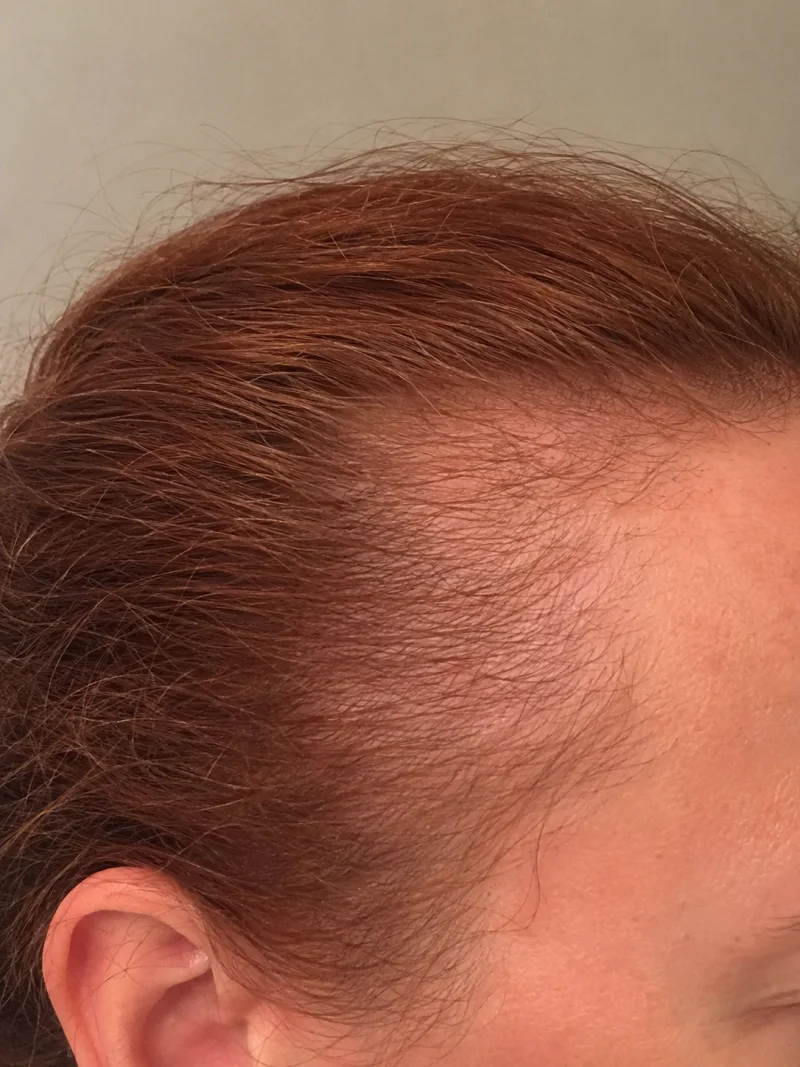
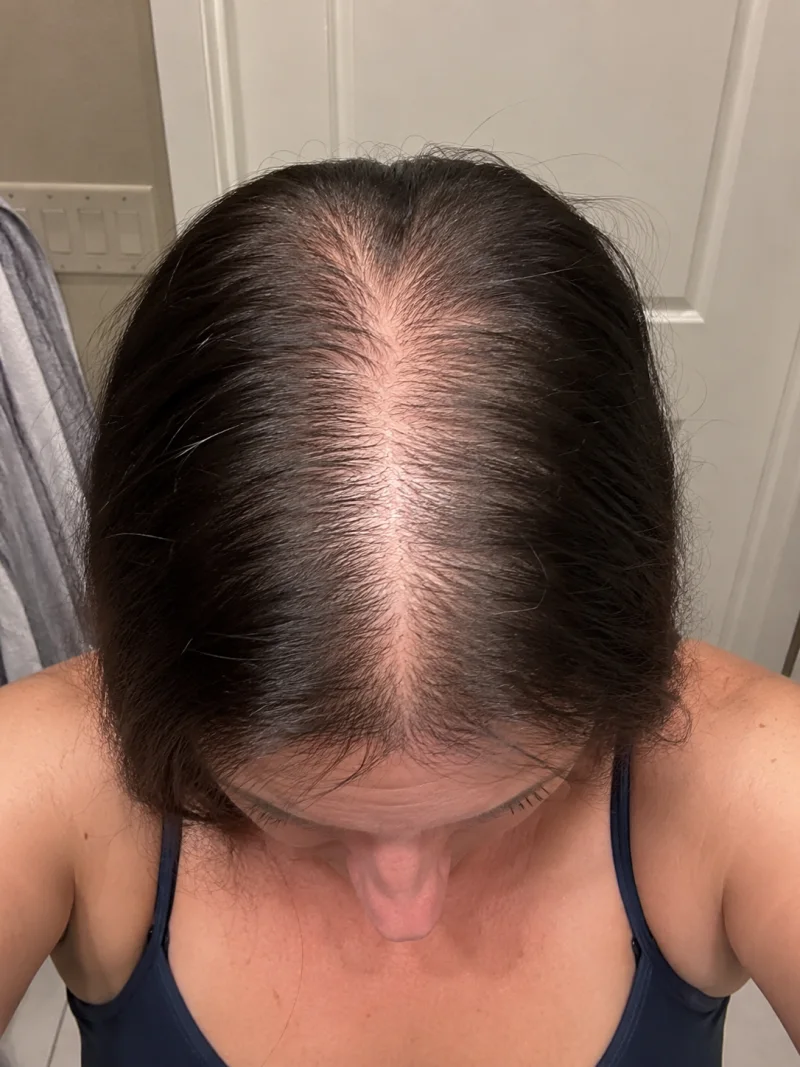
If Your Hair Is Falling and Your Periods Have Always Been Heavy
You have probably never connected the two. There is no reason you would. One happens in the bathroom, the other happens in the shower, and nobody in a white coat has ever put them in the same sentence for you.
Your labs came back normal, so the conversation stopped. What they measured was hemoglobin, and that test asks one question: are you anemic enough to be in danger?
It does not ask the question your hair depends on.
I need to be blunt, because I spent years not asking it either: your period has been withdrawing iron every single month, and nobody was counting.
Ferritin, your stored iron, can sit on the floor while your hemoglobin looks perfectly normal. Ask for it by name.
- Hair coming out in handfuls that genuinely frighten you
- Exhausted by mid-afternoon, and sleep does not touch it
- Legs full of cement, heart pounding on the stairs
- Labs called normal, and the conversation ended there
It Was Never Hormones. It Was Arithmetic.
Here is what changed how I practice. A heavy period removes iron. Not once, not occasionally: every few weeks, for years, for decades. If yours have been heavy since your twenties, that is a very long series of withdrawals from an account nobody was topping up.
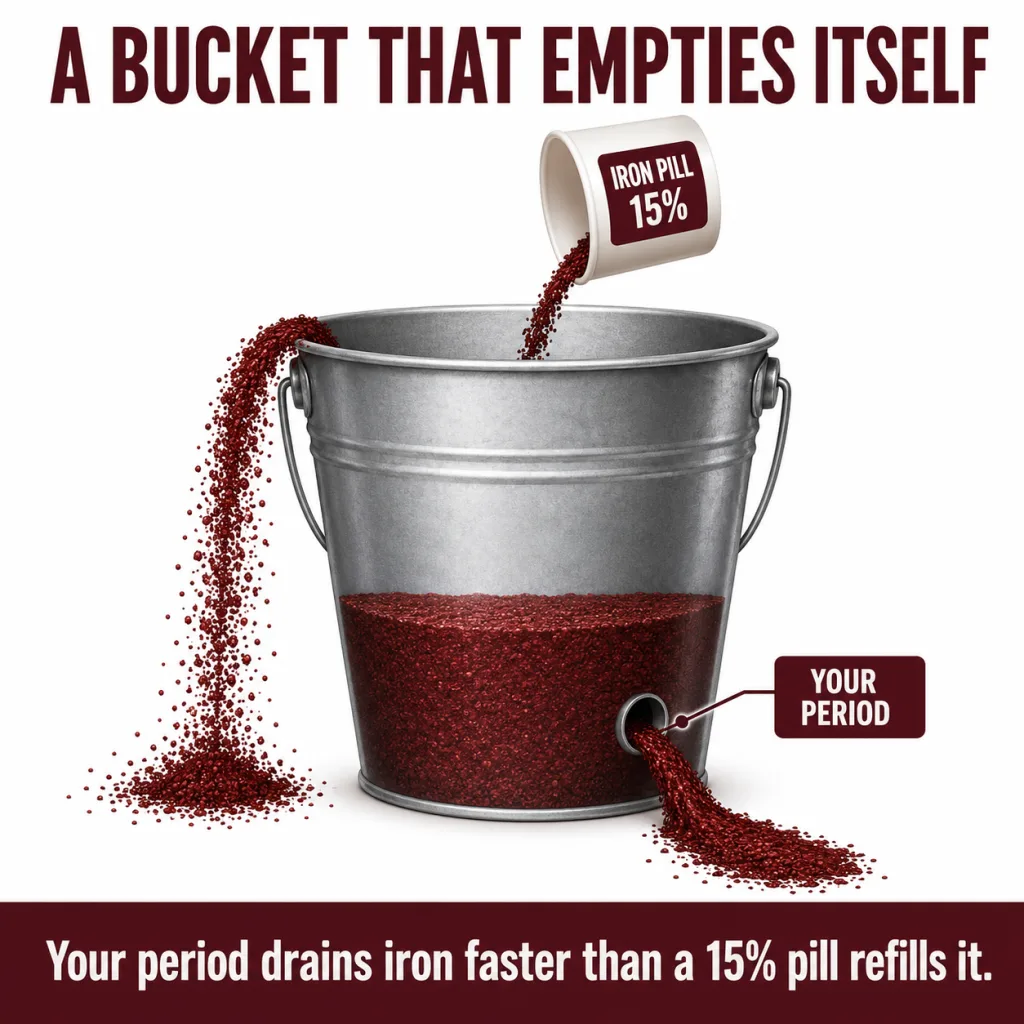
Picture a bucket with a hole in it that opens every month. That is the whole problem, and it is not a metaphor for a hormone imbalance. It is subtraction.
Which is also why, for the women who did get put on iron, it went nowhere. A bucket that empties itself every few weeks cannot be filled by a cup that leaks 85% before it reaches the rim.
This is why nothing moved for women who:
- Have always called their periods normal because they have never had others
- Were told hormones, stress or age and stopped there
- Took ferrous sulfate for months and watched their number crawl
You do not need more of the same iron.
You need a form that refills faster than your period drains, and something that makes it stay.
What I Started Recommending Instead
You do not need a prescription to refill a bucket. But it helps when the formula does both jobs instead of one.
That is why I now start these patients on Bio-Iron+ by AllFemme, and ask for a ferritin test first so they can watch the number themselves:
Why Bio-Iron+ Keeps Up When a Prescription Could Not
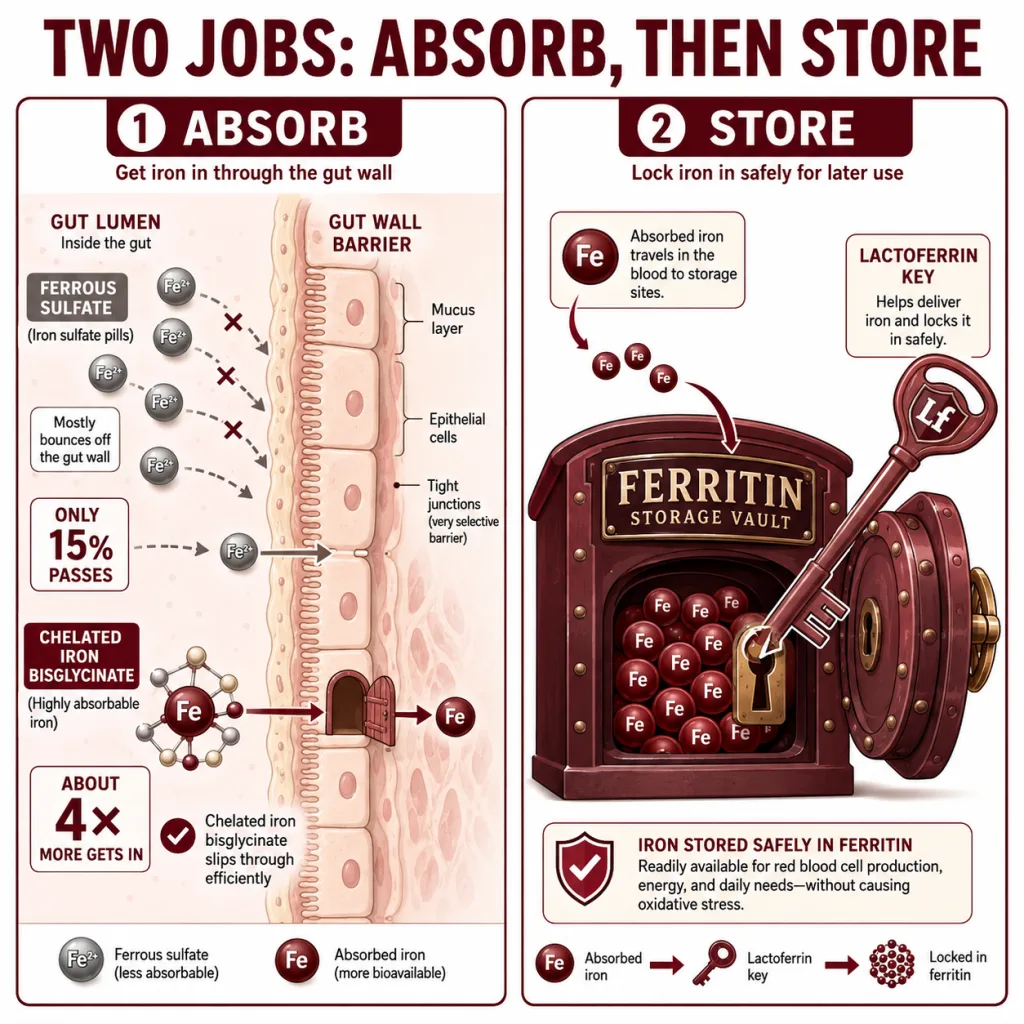
What sets Bio-Iron+ apart is not more iron. It is that it does two jobs: get it in, then make it stay.
Ferrous sulfate absorbs at about 15%. The 85% left behind is exactly the constipation, the nausea and the bloating, and it is also the reason the refill never outpaced the drain.
Iron bisglycinate is chelated, so it takes a different route in and bypasses the gut that punished you:
- Roughly 4x better absorbed
- Gentle enough to actually keep taking
- Nothing sitting in your stomach doing damage
Then lactoferrin and the cofactors do the second job, the one nothing else was attempting.
Just the iron you absorbed, turned into iron you keep.
What surprises my patients most is the order things come back in.
Energy first, in the early weeks. The mid-afternoon cement lifts before anything visible happens. Then, on a retest, a ferritin number that has finally moved instead of crawling.
And around month three, the shedding slows and the new growth starts at the hairline.
Refilling faster than the monthly drain is what finally triggers real change.
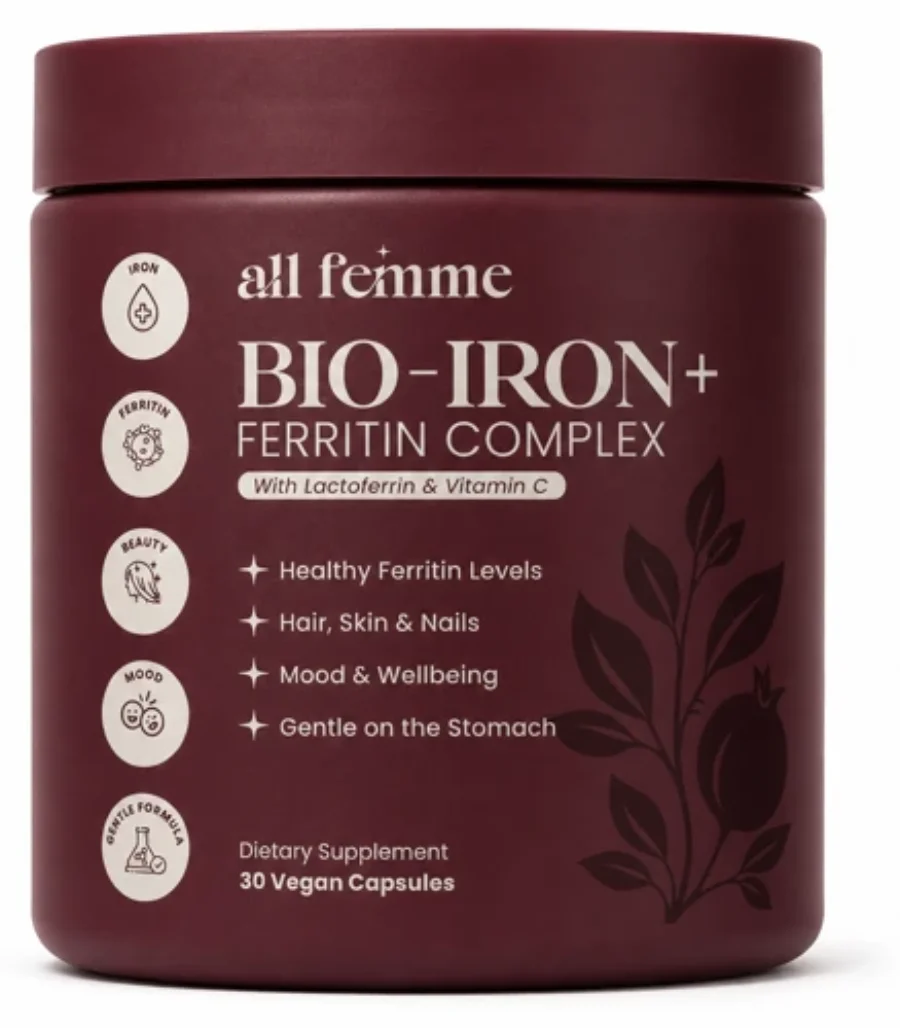
Built the Way Ferritin Actually Rises
What made me comfortable recommending Bio-Iron+ is that it follows the chain in order: absorb, convert, store. That is the sequence, and standard iron only ever attempted the first step.
It is what I would write out by hand for a patient with heavy periods, in one small capsule.
How the features help:
- Iron bisglycinate refills faster than the monthly drain empties
- Lactoferrin helps direct iron into ferritin storage, and almost nothing else on the shelf includes it
- Vitamin C, B6, B12, folate, copper convert what you absorb instead of letting it pass through
If your period has been quietly draining you since your twenties, this is the first thing that refills faster than it takes.
What My Patients Report:
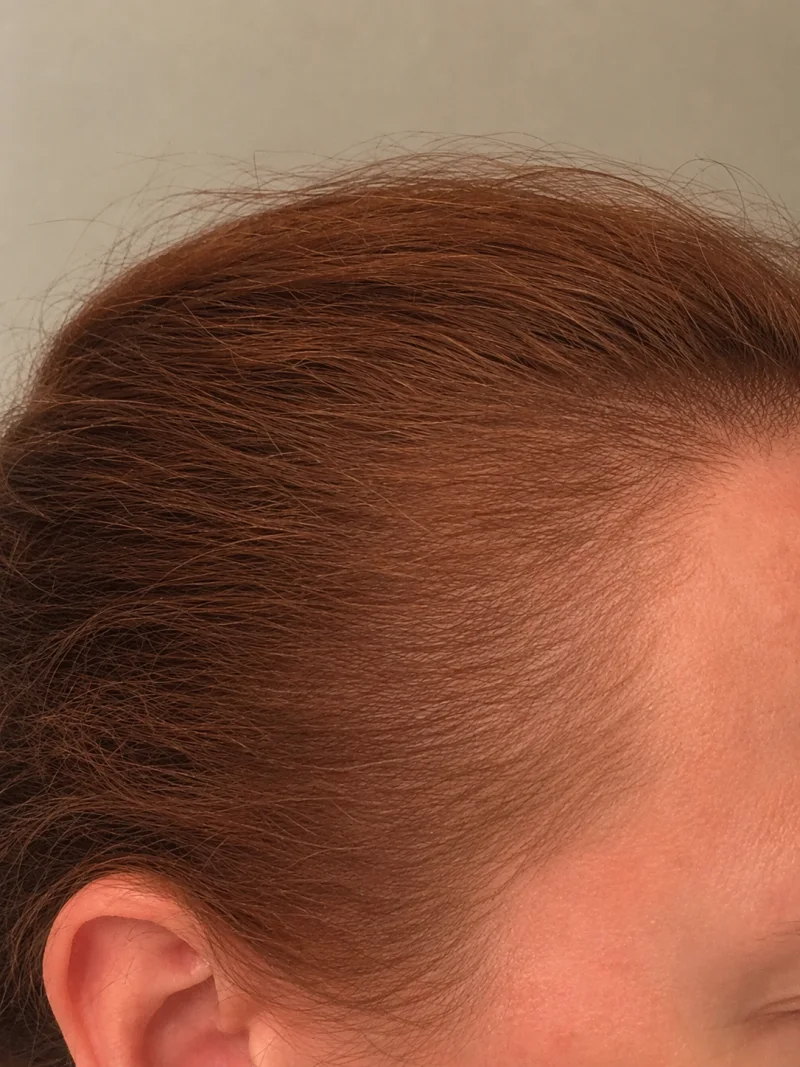
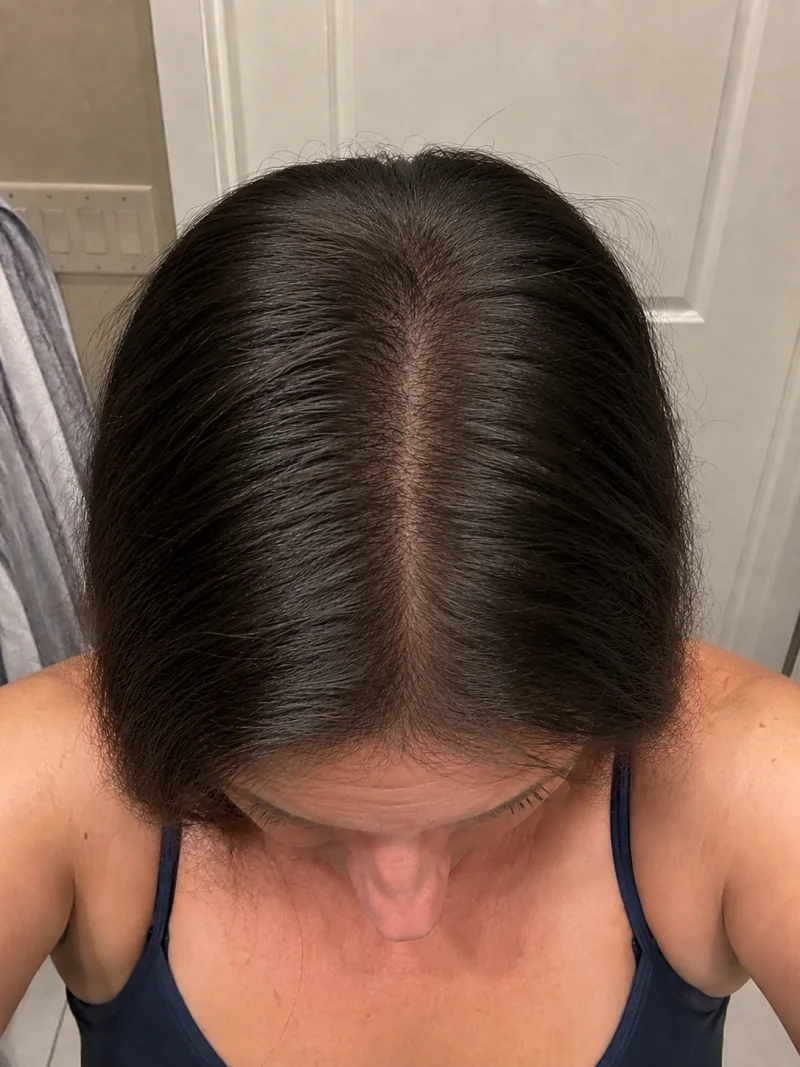
The monthly dread goes first. Her period still comes, but it stops taking her hair and her energy with it.
I tell every patient the honest timeline up front: energy in weeks, ferritin on a retest at 8 to 12 weeks, hair around month three. Anyone promising days is selling you something.
My Honest Assessment
I will be honest. I was skeptical that a supplement could do what my prescriptions had not.
The marketing felt aggressive, the claims seemed too good to be true, and I had spent a career being taught that ferrous sulfate was the standard of care.
But the absorption science is not marketing, it is pharmacology I should have read years earlier. And the arithmetic of a monthly drain is not an opinion at all. I believe this is the genuine breakthrough.
Fixing this does not just move a number on a lab report.
It ends fifteen years of blaming your hormones for something that was never their fault.
Here is the thing. Lactoferrin and chelated iron are not cheap ingredients.
But add up the hair supplements, the shampoos, the specialist visits, and the years of accepting exhaustion as your personality. My patients go quiet when they do that math.
More importantly, they stop dreading the calendar.
They stop looking at the drain, and they stop counting what is left in the brush.
When you compare the options side by side, there is a clear winner. Here is what I found:
🩸
Keeps up with a period
🚫
Storage
⚗️
Stomach
💰
Price
Refills faster than the monthly drain
Lactoferrin + cofactors lock it into ferritin
One small gentle capsule
$49/bottle (bundle)
Ferrous Sulfate
~15% absorbed, never kept up
Nothing to store it
Constipation, nausea, bloating
Cheap, and it never moved the number
Hair Supplements
No iron at all
Nothing to store
Fine, and useless for this
$40-80/month for years
The bottom line: If your periods have always been heavy and your hair is falling, that is not two problems and it is not your hormones. It is one account being drained faster than anything was refilling it.
What you get:
The Questions My Patients Ask Before Trying Bio-Iron+
These are the ones I answer in almost every appointment...


